
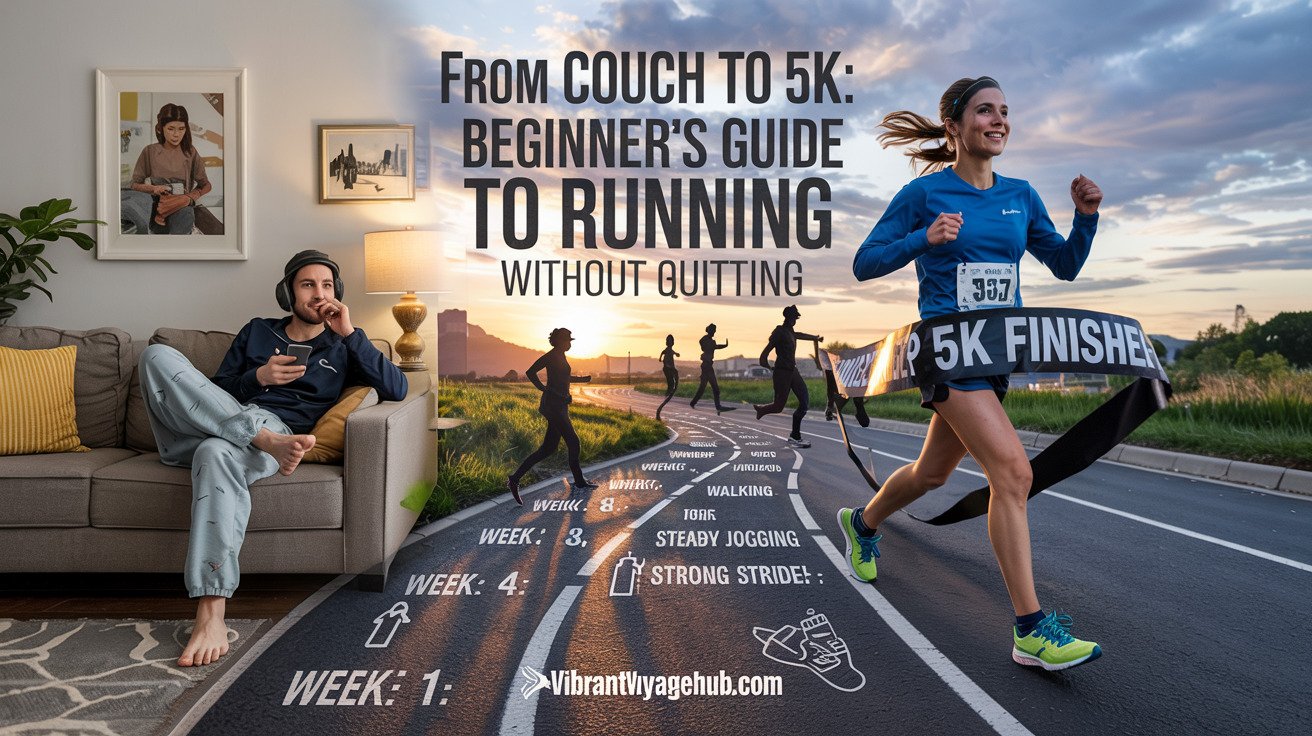
From Couch to 5K: A Beginner’s Guide to Running Without Quitting
Have you ever wondered if it’s possible to transform from a non-runner to a runner in just a few weeks? You’re not alone. Many people struggle to get started with running, but with the right training plan, you can achieve your goals.
The journey begins with a decision: to start. Maybe it’s a health scare, a new year’s resolution, or simply a desire to challenge yourself. Whatever the reason, the first step is always the hardest—but it’s also the most powerful. This guide will walk you through the process of creating a beginner’s running program that works for you.
By following a progressive training plan, you’ll be able to complete a 5K race with confidence. You’ll learn practical strategies like the run/walk method to make the journey manageable and enjoyable.
Key Takeaways
- Learn how to create a personalized running plan that suits your needs.
- Understand the benefits of starting with a 5K distance.
- Discover the importance of proper gear for running.
- Find out how to develop mental fortitude for training.
- Explore strategies to make running a sustainable habit.
Why Running a 5K Is the Perfect Goal for Beginners
For those new to running, a 5K race is an ideal starting point, offering a challenge that’s both motivating and attainable. The distance of 3.1 miles is long enough to be a test of endurance but short enough to be achievable with a structured training program.
The Achievable Challenge of 3.1 Miles
The 5K distance is perfect for beginners because it requires minimal specialized equipment and can be trained for in as little as 8-10 weeks. This makes it an ideal first goal for those looking to start running.
- The 5K distance provides a perfect balance of challenge and achievability.
- It requires minimal equipment and can be trained for in a short period.
- The training process builds cardiovascular fitness and mental resilience.
Physical and Mental Benefits of Starting Your Running Journey
Completing a 5K gives you a tangible achievement to celebrate while providing a foundation for future running goals. The physical benefits include improved heart health and weight management, while mental benefits include stress reduction and improved mood.
By starting your journey with a 5K, you’re not only working towards a specific goal but also adopting a healthier lifestyle. With a well-structured training plan, you’ll be ready to participate in a race in no time.
Finding Your “Why”: Establishing Your Running Motivation
Understanding your ‘why’ is crucial for maintaining momentum in your running journey. Before you buy a new pair of running shoes and lace up, ask yourself: Why do you want to start running? Your “why” is your anchor that keeps you going when your legs feel heavy, motivation fades, and the couch looks more tempting than your running shoes.
Identifying Personal Reasons to Start Running
Identifying your personal motivation for running is crucial for long-term success. Common motivations include improving health, losing weight, reducing stress, accomplishing a goal, or connecting with a community. Your reason should be personally meaningful.
Setting Realistic Expectations and Goals
Setting realistic expectations prevents disappointment and burnout. Understand that progress in running is rarely linear and everyone’s journey is unique. Creating SMART goals (Specific, Measurable, Achievable, Relevant, Time-bound) provides clear direction and measurable milestones beyond just “finishing a 5K.”
| Goal Type | Description | Example |
|---|---|---|
| Specific | Clearly define your goal | Run a 5K in 12 weeks |
| Measurable | Quantify your goal | Reduce 5K completion time by 2 minutes |
| Achievable | Ensure the goal is realistic | Increase weekly running distance by 10% |

Connecting your running goals to deeper values or life aspirations creates stronger intrinsic motivation that sustains your practice over time. Writing down your “why” and keeping it visible can help reinforce your commitment on days when motivation wanes.
Essential Gear: What You Actually Need to Start Running
Before you hit the road, it’s crucial to invest in the right running gear. Having the right equipment can significantly enhance your running experience, making it more comfortable and enjoyable.
Choosing the Right Running Shoes
Investing in a quality pair of running shoes is the most critical step. Most athletic sneakers are not designed for running and can increase your chance of injury. To find the best pair, visit a specialty running store where staff can analyze your gait and recommend shoes that match your foot type and running style.
Check out our list of the best running shoes for beginners if you need a place to start. Your local running store can also help you pick the right pair, ensuring that your shoes provide the necessary support and cushioning.
Comfortable Clothing and Accessories
Wear whatever feels comfortable to move in, along with running shoes that support your feet. A supportive bra is also essential for women. You’ll need your phone to hear your Couch to5K coach, so if you don’t have a pocket, consider a running armband to keep your phone secure.
- Proper running shoes provide support, cushioning, and stability specific to running movements.
- Choose moisture-wicking clothing that moves with your body and prevents chafing.
- Weather-appropriate gear is crucial: opt for lightweight, breathable fabrics for warm weather and layerable pieces for cold conditions.
- Supportive sports bras for women and comfortable, non-chafing underwear are essential for running comfort.
- Optional accessories include a running watch or app to track progress, reflective gear for visibility, a hat or sunglasses for sun protection, and a water bottle for hydration on longer runs.
Make sure to start running with the right mindset and preparation. With the right gear, you’ll be well on your way to a successful running journey.
From Couch to 5K: A Beginner’s Guide to Running Without Quitting
To go from couch to 5K without quitting, it’s essential to understand the importance of gradual progression in your training. One of the biggest mistakes beginners make is trying to run too far, too fast, too soon. This often leads to burnout, frustration, and injuries, none of which will keep you coming back for more.
Understanding the Progressive Training Approach
The Couch to 5K approach uses a progressive training program that gradually increases your running time while decreasing walking intervals over 8-9 weeks. This methodical approach allows your cardiovascular system, muscles, and joints to adapt safely to the new demands of running. By starting with more walking than running and gradually shifting that ratio, you can build endurance without overwhelming your body.
| Week | Running Time | Walking Time |
|---|---|---|
| 1-2 | 1 minute | 4 minutes |
| 3-4 | 2 minutes | 3 minutes |
| 5-6 | 3 minutes | 2 minutes |
| 7-8 | 5 minutes | 1 minute |
| 9 | 30 minutes | 0 minutes |
The Power of Consistency Over Speed
Consistency in following the couch to 5K plan is far more important than speed. Running slowly and regularly builds more fitness than occasional fast runs. The progressive nature of the program helps prevent the common beginner mistake of doing too much too soon, which often leads to injury or burnout. Physiological adaptations that make running feel easier typically take 4-6 weeks to develop, so patience during the early weeks is essential for long-term success.
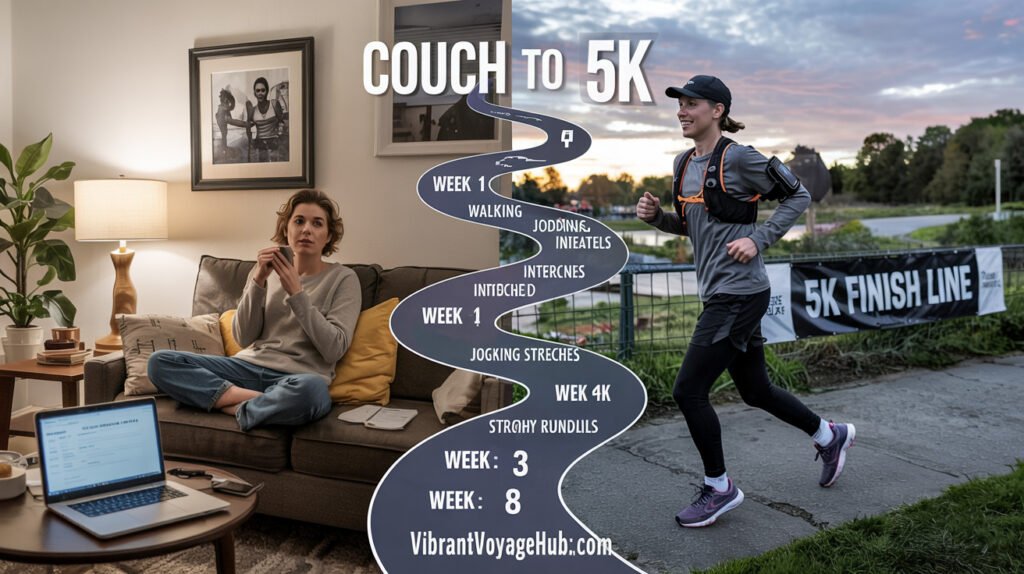
By embracing the walk-run method and adhering to a progressive training program, you can make steady progress and achieve your goal of running a 5K without stopping. Remember, the key is to focus on your progress and maintain a consistent pace.
The Run/Walk Method: Your Secret Weapon
Alternating between running and walking is a highly effective strategy for beginners to progress in their running journey. This method allows you to build endurance gradually, making it easier to reach your running goals without feeling overwhelmed.
Why Alternating Running and Walking Works
The run/walk method is beneficial for several reasons. Firstly, it reduces the overall physical stress on the body, making it an ideal approach for new runners. By alternating between running and walking, you allow your body to recover between efforts, which helps in building fitness without excessive strain.
Moreover, this method provides a psychological benefit. Knowing that a walk break is coming makes longer distances feel more manageable and less intimidating. This mental boost can be a significant motivator, helping you to stay on track with your training.
Sample Run/Walk Progression Plans
To implement the run/walk method effectively, you can start with a simple ratio, such as one minute of running followed by one minute of walking. As you get fitter, you can gradually increase the running intervals while keeping the walking intervals constant.
For example, you can begin with the following progression plan:
| Week | Run Interval | Walk Interval |
|---|---|---|
| 1 | 1 minute | 1 minute |
| 2 | 2 minutes | 1 minute |
| 3 | 3 minutes | 1 minute |
| 4 | 5 minutes | 1 minute |
| 5 | 5 minutes | 30 seconds |
As you progress, you can continue to increase your running intervals and decrease your walking intervals until you can run continuously without stopping.
By incorporating the run/walk method into your training program, you can make significant progress in your running journey. This approach not only helps in building endurance but also makes the overall experience more enjoyable and less daunting.
Your 8-Week Couch to 5K Training Plan
Starting your running journey with a well-designed 8-week couch to 5K plan can be transformative. This comprehensive program is tailored for beginner runners aiming to complete their first 5K or those who have run in the past but are returning to running.
Week-by-Week Breakdown
The 8-week training plan is structured to gradually build your running endurance. Weeks 1-2 focus on establishing the habit with short run/walk intervals (1 minute running, 1-2 minutes walking) for 20-30 minutes, three times per week. As you progress, weeks 3-4 increase running intervals to 2-3 minutes with 1-minute walking breaks.
By weeks 5-6, you’ll further extend running segments to 5-8 minutes with shorter recovery walks, building significant endurance improvements. Finally, weeks 7-8 prepare you for race day with longer running intervals of 10-15 minutes and minimal walking, culminating in a 25-30 minute continuous run.
| Week | Running Interval | Walking Break | Total Duration |
|---|---|---|---|
| 1-2 | 1 minute | 1-2 minutes | 20-30 minutes |
| 3-4 | 2-3 minutes | 1 minute | 25-35 minutes |
| 5-6 | 5-8 minutes | 1-2 minutes | 30-40 minutes |
| 7-8 | 10-15 minutes | Minimal | 25-30 minutes continuous |
Rest Days and Cross-Training
The plan includes two complete rest days per week, allowing your body to recover and adapt. Cross-training days, which can include low-impact activities like biking, elliptical, or swimming, provide cardiovascular benefits without the impact of running.
Strength Training for New Runners
Strength training is a crucial component, focusing on exercises that strengthen your core, hips, and legs. This not only helps prevent injuries but also improves your running efficiency, making you a more powerful runner.
Essential Rules for Beginner Runners
As you start your running journey, it’s essential to keep in mind a few crucial rules that will help you stay on track. These guidelines are designed to help you navigate the challenges of beginning a running regimen and ensure a successful experience.
Consistency Over Perfection
One of the most important principles for new runners is to prioritize consistency over perfection. It’s unrealistic to expect to follow a training plan 100% of the time. Instead, aim to complete 90-95% of your planned workouts. This approach allows for flexibility and acknowledges that some days will be more challenging than others.

Listening to Your Body
It’s vital to pay attention to your body‘s signals and distinguish between normal training discomfort and potential injury warning signs. Every runner experiences bad days, and it’s essential to understand that these are a normal part of the process. When you feel like you’re not making progress, remember that it’s part of the journey.
Managing Expectations
To avoid frustration, it’s crucial to manage your expectations. Focus on process goals, such as completing workouts and maintaining consistency, rather than outcome goals like specific times or distances. By doing so, you’ll be able to appreciate your progress and stay motivated.
Some key takeaways for beginner runners include:
- Aiming for consistency rather than perfection in your training plan.
- Listening to your body and responding to its needs.
- Understanding that progress is not always linear.
By following these essential rules, you’ll be well on your way to a successful and enjoyable running experience.
Overcoming Common Beginner Challenges
The path to becoming a runner isn’t without its hurdles, but knowing what to expect can make all the difference. As you start your running journey, you’ll encounter various challenges, but understanding these obstacles is the first step to overcoming them.
Dealing with Discomfort and Soreness
It’s normal to feel like you’re not used to the physical demands of running. Soreness will peak around 36 hours after exercise and then start to subside. Generally, the soreness will decrease or go away with light exercise. To manage muscle soreness, focus on gentle movement, proper hydration, and adequate protein intake.
Distinguishing Between Pain and Injury
It’s crucial to differentiate between normal muscle soreness and potential injuries. Soreness typically peaks 24-48 hours after exercise and gradually improves, whereas injuries cause sharp pain, persist during rest, or worsen over time. Being aware of your body’s signals will help you address issues before they become serious.
Staying Motivated When Progress Feels Slow
Progress can be slow, especially for beginners. Having multiple sources of motivation, such as health goals, social connections, and tracking time, can help maintain consistency. Remember, plateaus in progress are normal and temporary, and they often precede breakthroughs if you continue training consistently.
By understanding these common challenges and knowing how to address them, you can stay on track and enjoy your running journey over time.
Mental Training: The Psychology of Becoming a Runner
Becoming a runner is as much about mental preparation as it is about physical training. As you progress on your running journey, it’s essential to develop a runner’s mindset, create effective running habits, and find a supportive community to help you stay motivated.
Developing a Runner’s Mindset
To make running a sustainable part of your lifestyle, you need to embrace discomfort as part of the process. Developing mental toughness is crucial, and this can be achieved by creating a personal mantra or using positive self-talk phrases to overcome difficult moments during runs. As one experienced runner puts it,
“Motivation will get you started, but habits will keep you going.”
Creating Effective Running Habits
Establishing consistent running habits requires treating your runs as non-negotiable appointments and finding a schedule that works with your lifestyle. It’s also essential to listen to your body and rest when needed, but not quit completely. By doing so, you’ll be able to make running a habit that becomes second nature.
Finding Your Running Community
Finding a running community, whether in-person or virtual, provides accountability, support, and shared experiences that can significantly boost motivation. You can join a local running group or connect with fellow runners online to find the support you need to stay on track with your running journey.
By focusing on the mental aspect of running and creating effective habits, you’ll be well on your way to making running a sustainable part of your lifestyle.
Race Day Strategies: Crushing Your First 5K
With your training complete, it’s time to focus on the strategies that will help you crush your first 5K. On race day, a well-planned approach can make all the difference in your performance and overall experience.
Pre-Race Preparation
Preparation is key to a successful race day. First, check out the course map and elevation profile on the race website to understand the terrain and potential challenges. If possible, drive the course before the race to familiarize yourself with its nuances. On race day, arrive 30-45 minutes early to pick up your bib, use the bathroom, and get settled before the start.
Pacing Yourself Effectively
To avoid burnout, start toward the back of the pack. This allows you to begin at a comfortable pace without getting caught up in the initial rush. Additionally, break the race into smaller chunks, focusing on one mile at a time. This mental strategy can make the 3.1-mile distance feel more manageable.
| Strategy | Benefit |
|---|---|
| Check course map | Familiarity with terrain |
| Arrive early | Reduced stress, more time for preparation |
| Start toward the back | Avoids early burnout |
| Break race into chunks | Makes distance more manageable |
Celebrating Your Achievement
Crossing the finish line is a significant achievement, regardless of your time. It’s essential to plan a meaningful way to celebrate your accomplishment. Whether it’s treating yourself to a favorite meal or sharing your success with friends and family, acknowledging your hard work and dedication will make the experience even more rewarding.
As you stand at the finish line, remember that your first 5K is just the beginning of your running journey. You’ve taken a significant step toward a healthier, more active lifestyle, and that’s something to be proud of.
Conclusion: Your Running Journey Beyond the 5K
The journey from couch to 5K is not just about running; it’s about transforming your life. As you cross the finish line, you’ve not only achieved a significant milestone but have also laid the foundation for a potential lifelong relationship with running.
Completing your first 5K is a testament to your commitment and perseverance. The skills and discipline you’ve developed can be applied to other areas of your life, empowering you to tackle new challenges. Many runners find that after completing their first 5K, they begin setting new goals, whether it’s improving their 5K time or tackling longer distances.
The running community offers a wealth of opportunities for continued growth through local clubs, virtual challenges, and charity events. As you continue on your running journey, remember that every step forward is a step towards a healthier, more fulfilling life. You’ve made a significant start; now, it’s time to keep moving forward. Tie your shoes, hit the pavement, and let’s run toward something amazing.
FAQ
What is the best way to start a running plan?
How do I choose the right running shoes?
What should I wear for my first runs?
How often should I run when starting out?
What is the run/walk method, and how does it work?
How do I stay motivated when progress feels slow?
What are some common injuries for new runners, and how can I prevent them?
How do I prepare for my first 5K race?
editor's pick
latest video

news via inbox
Nulla turp dis cursus. Integer liberos euismod pretium faucibua


